
Burst Pipe Water Damage in Shawnee, KS
Burst pipe water damage is the damage caused when a pipe splits or fails and floods walls, floors, and ceilings. Burst pipe water damage in Shawnee, KS often traces back to freezing and thawing. This is an emergency, since water keeps flowing until the supply is shut off and keeps soaking in until it is removed. Our team helps Shawnee, Kansas homeowners stop the damage, remove the water, and dry what it reached.
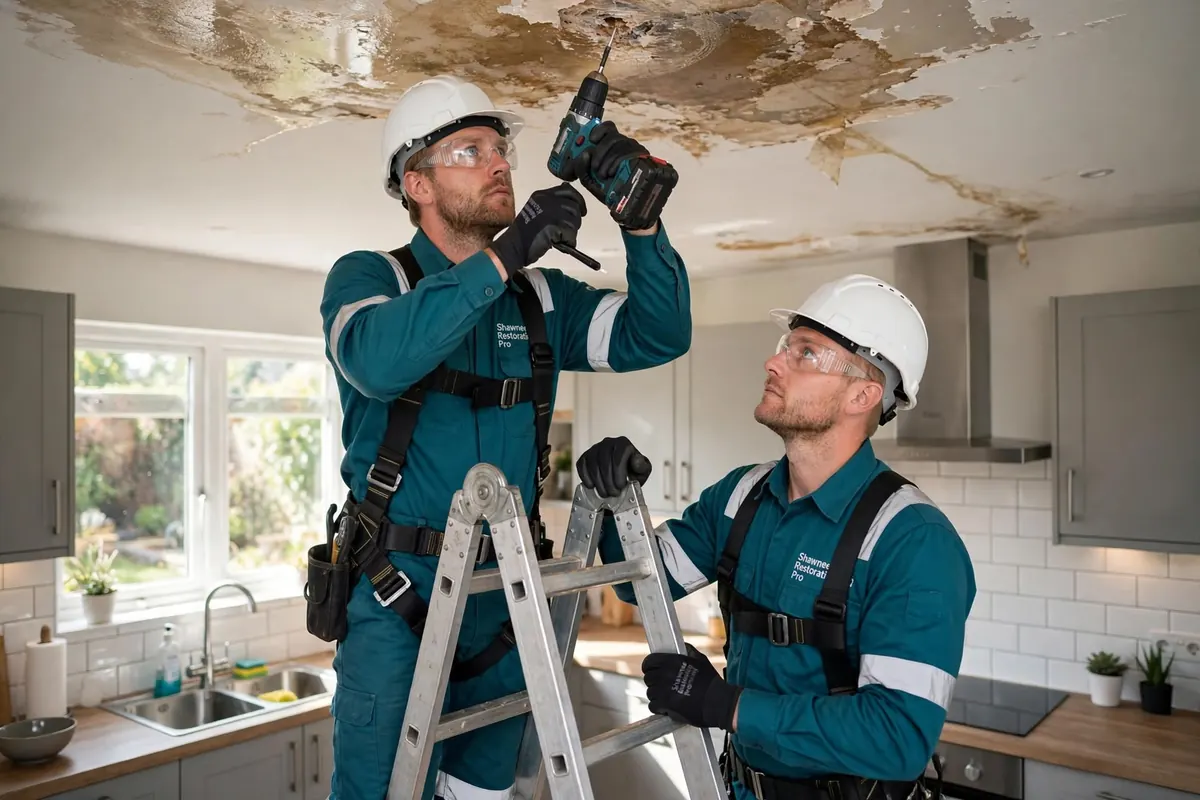
Pipe Burst? What to Do Right Now
What to do when a pipe bursts comes down to three things: shut off the water, stay clear of electrical hazards, and document the damage. A burst pipe is an emergency because water can pour out in volume until the supply is stopped, so these steps come first.
Shut Off the Main Water Valve
How do you shut off water to the house after a pipe bursts? Find the main shutoff valve, usually in the basement, a utility room, or near where the supply line comes in from outside, and turn it fully off. Then open a faucet to drain what is left in the pipes. Find this valve before you ever need it, because minutes matter when a pipe is flooding a wall.
Stay Safe Around Electricity and Ceilings
Electricity and standing water are a dangerous mix. If water is reaching outlets, light fixtures, or the electrical panel, stay away; an electrician or your utility can cut the power when the panel is out of safe reach. A sagging or bulging ceiling may be holding a large amount of water, so keep out from under it.
Photograph the Damage and Start Removing Water
Photograph the burst pipe, the wet areas, and damaged belongings before anything is moved, since those photos back up a homeowners insurance claim. Burst pipe water removal in Shawnee starts as soon as the supply is off, and getting the water out is the work of water extraction and removal: the less time it sits, the less reaches walls and floors.
Frozen Pipes in Shawnee: Why They Burst and When the Flooding Starts
Frozen pipe water damage in Shawnee, KS usually begins with a cold snap, but the flooding often does not begin until later.
Why Frozen Pipes Burst
Water expands as it freezes. When ice forms inside a pipe, pressure builds against the pipe walls and in the section between the ice and the nearest closed fixture, and the pipe can split. Pipes in exterior walls, attics, garages, and crawl spaces are the most exposed.
Why the Flooding Often Starts When the Ice Thaws
If a frozen pipe burst when it thawed, what to do first is the same: shut off the main valve. Some pipes split while they are still frozen and others crack as they thaw, but either way the water often does not pour out until the ice melts and the pipe is no longer plugged. That is why water damage after pipes thaw can appear even after a cold snap seems to be over.
Cold Snaps in the Kansas City Area
When a hard freeze hits the Kansas City area, pipes in homes of any age can freeze. After a sub-zero stretch, FOX4 reported restoration crews working overtime on metro homes with frozen and burst pipes, noting that half of the eight water damage companies it contacted were too busy to take calls.
Where Burst Pipes Hide: Walls, Ceilings, and Basements
A Pipe Burst Inside a Wall
Signs of a burst pipe in a wall are easy to miss: damp or stained spots, bubbling paint, the sound of running water when nothing is on, or a sudden jump in the water bill. Water inside a wall soaks drywall and insulation from within, so the damage can be large before anything shows.
Ceiling and Upper-Floor Leaks
A ceiling leak from a burst pipe often means water has collected above the ceiling and is working its way down through drywall and insulation. Brown stains, a sagging ceiling, or dripping from light fixtures are warning signs, and water can travel along framing to a spot far from the actual break.
Basements and Unheated Spaces
Pipes in basements, crawl spaces, garages, and other unheated areas are the most likely to freeze, and a pipe burst in a basement can mean water damage across the floors and walls below. A water line break cleanup in Shawnee follows the same steps as other lower-level flooding, with extra care for finished walls and stored belongings, the same issues that come up with basement water damage.
How Burst Pipe Water Damage Is Cleaned Up and Dried
Burst pipe cleanup in Shawnee follows the water: find where it went, take it out, dry what it soaked, and confirm the job is done. Each stage is guided by moisture readings, not by how the surfaces look.
Finding How Far the Water Traveled
Water from a burst pipe follows framing, wiring holes, and gaps in floors to reach walls above and below the break, so the first step is finding every wet area. A pipe that burst in an attic or upper wall can send water down through several levels before anyone notices. Moisture readings show which walls, floors, and ceilings are wet, including areas that look dry, and they guide the rest of the job.
Removing the Water
Pooled water is pumped out and wet floors are extracted so the moisture stops traveling, which is the same process whether the break came from supply lines, fittings, or a water heater connection. Because supply-line water starts clean, removing it early improves the chance that materials can be dried instead of replaced.
Drying Walls, Floors, and Ceilings
With the water removed, walls, floors, and ceilings still hold moisture, and structural drying and dehumidification draws it out with airflow and humidity control. Drying walls and ceilings after a burst pipe takes care, because wet drywall and insulation can sit unnoticed behind a finished surface.
Dealing With Wet Drywall and Insulation
Drywall that stayed firm and was wet only briefly can sometimes be saved, while drywall that has gone soft, swollen, or stained through usually has to be replaced, and wet insulation often cannot be saved. Reaching moisture inside a wall may mean opening part of it. Readings and a careful look decide which materials can be dried, and results cannot be promised ahead of time.
Cleaning and Confirming Dry
Water from a supply line starts out clean, but it can pick up contamination from the materials it soaks, especially the longer it sits, so affected areas are cleaned as needed. Readings are repeated while drying continues, and the job is complete once the materials read dry.
Plumber or Water Damage Company: Who Do You Call?
Plumber or water damage company for a burst pipe? You need both, and they do different jobs. A plumber repairs the broken pipe and restores the water supply, while a water damage company removes the water, dries the structure, and cleans up what it soaked. The right order is to shut off the water, call a plumber for the pipe, and call a water damage company for the water, and the two can happen at the same time. Waiting on one does not have to delay the other. Calling both early keeps the damage from growing while the pipe is being fixed.
How to Prevent Frozen Pipes From Bursting
Most burst pipes can be avoided with a few steps before a hard freeze:
- Insulate pipes in exterior walls, attics, garages, and crawl spaces
- Let a faucet drip during a hard freeze so water keeps moving
- Open cabinet doors under sinks so warm air reaches the pipes
- Know where your main water valve is before you need it
- Keep the heat on when you are away
If a pipe is frozen but has not burst, shut off the water and call a plumber, and never use an open flame to thaw it. For more cold-weather home tips, see KCUR.
What Affects the Cost and Time After a Burst Pipe
No two burst pipes cause the same damage. What the job costs and how long it takes depend on how long the water ran before it was shut off, how many rooms and floors it reached, which materials are wet, and how easy it is to reach wet wall cavities. Water that ran for hours through a finished wall takes more work than a leak caught early. This page lists no prices, since the damage has to be assessed first.
Does Insurance Cover a Burst Pipe?
Does homeowners insurance cover frozen pipes in Kansas? Often yes for a sudden burst, but it depends on the policy. Many homeowners policies cover sudden pipe bursts, though coverage can depend on the cause and on steps such as keeping the home heated, so check yours or ask your agent. Photos taken before cleanup help, and so do receipts for repairs and cleanup. We also work with your insurance company.
Burst Pipe Water Damage in Shawnee, KS
We handle residential burst pipe water damage throughout Shawnee, Kansas, in Johnson County, and homes in ZIP codes 66203 and 66217 are well within our coverage area. A pipe can burst in one room or flood an entire level, and the same steps apply to both. Not sure you are in range? Mention your street when you reach us.
10124 W 59th TerraceShawnee, KS 66203
Reach Us for Burst Pipe Water Removal in Shawnee
Reach Us Now After a Pipe Bursts
If a pipe has burst, shut off the water if you can and get in touch right away. Burst pipe water removal in Shawnee is an emergency job, and the sooner it starts, the less the water spreads. Our crew is IICRC certified and licensed and insured, with 24/7 availability, and is ready to work with your insurance company.
What to Tell Us About the Burst Pipe
Tell us which pipe burst and where, whether the main valve is closed, how long the water ran, which rooms and floors are wet, and whether water has reached outlets or the panel. Photos are welcome as long as taking them does not put you at risk.