
Structural Drying & Dehumidification in Shawnee, KS
Structural drying removes the moisture left in walls, floors, and subfloors after the water itself has been removed. Our structural drying in Shawnee, KS is used when a burst pipe, a basement flood, or storm water has soaked the structure, because surfaces may look dry while the materials behind them are still wet. For homeowners in Shawnee, Kansas, drying is the step that stops damp walls and floors from turning into warped boards, musty odors, and bigger repairs.
Why a Dry-Looking Home Can Still Be Wet
With the puddles gone, moisture often remains in the materials your home is built from. It cannot be seen or reliably felt, which is why drying relies on measurement.
Moisture Hidden in Walls and Cavities
Drywall and insulation act like sponges, pulling water up from the baseboard, and wall cavities trap that moisture where air cannot reach it. Drying walls after a burst pipe is important, since a wall can appear fine while the framing and insulation inside stay wet.
Moisture Held in Subfloors and Flooring
Water that gets under flooring soaks the subfloor, and wood and padding hold moisture long after the surface dries. Hardwood absorbs it into the boards, carpet padding holds it like a sponge, and wet subfloor drying is needed because a damp subfloor releases moisture slowly back into the room.
What Lingering Moisture Leads To
A musty smell after water damage is often the first sign that moisture is still present. Left in place, it can also cause warping and cupping in wood flooring, soft drywall, and peeling paint. It creates the conditions for mold growth too, which is a risk of leaving materials damp, so drying early protects the building.
How Structural Drying and Dehumidification Work
Drying follows water extraction and removal, because a structure will not dry while water still sits on it. Once the standing water is out, structural drying and dehumidification in Shawnee, Kansas takes over the moisture that extraction cannot reach. Water damage drying in Shawnee follows the same logic in every home: measure, move air, control humidity, and confirm.
Measuring Moisture First
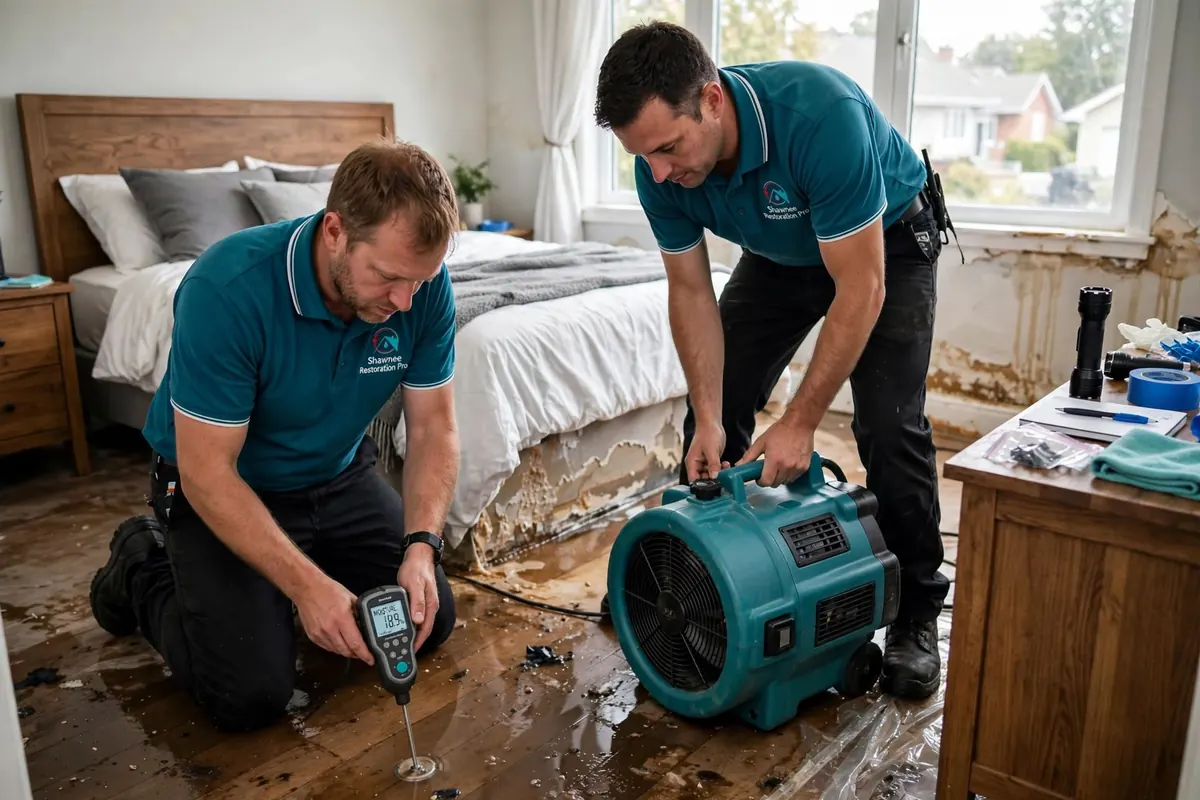
The job starts with moisture readings of walls, floors, and other materials, because the readings show what is actually wet before anything is done. They also set a baseline, so progress can be tracked and drying can be confirmed with numbers instead of guesses.
Airflow and Dehumidification Working Together
Do you need a dehumidifier after water damage? In most cases, yes, because airflow alone only moves moisture into the air. Moving air lifts moisture out of wet materials, and dehumidification after water damage in Shawnee homes removes it from the air so the materials keep releasing more. This matters most in lower levels, where air is stagnant, which is why basement water damage usually calls for drying as well as cleanup.
Drying Drywall, Insulation, and Wall Cavities
How to dry wet drywall depends on how wet it got and for how long. Drywall that is still firm can often be dried in place, while drywall that is soft, swollen, or sagging usually has to be cut out and replaced. Insulation that stays wet often has to be removed too. Which materials can be saved is decided by readings and a close look, so no outcome can be promised in advance.
Drying Hardwood, Subfloors, and Padding
Hardwood floor water damage drying is delicate, because boards that absorb water can cup, with the edges rising higher than the center, and they can crack if dried too aggressively. Hardwood floors cupping after water damage is common, and careful, controlled drying gives wood flooring the best chance, although no result can be guaranteed. Carpet padding that has soaked through is often replaced rather than dried.
Monitoring Until Drying Is Confirmed
How do you know when a house is dry after water damage? Moisture readings are taken again as drying continues and compared with the baseline and with readings from unaffected materials, and drying is complete when the wet materials reach normal levels. That confirmation matters before walls are closed up or flooring is replaced, because covering damp materials invites odors and mold.
How Long Does It Take to Dry After Water Damage?
How long it takes to dry after water damage varies with the materials involved, how much of the structure got wet, the humidity, and the amount of airflow. Dense materials such as hardwood and framing dry more slowly than carpet, and drying a house after flooding takes longer than drying a single room. Wall and floor drying after water damage can also run slower in humid weather, which the Kansas City area can see in summer, because damp air holds less additional moisture. Since these factors differ from home to home, no honest estimate can be given before the moisture is measured, and drying is finished when the readings say so, not when a set number of days has passed.
Signs Your Home Still Needs Drying
Surfaces can feel dry while moisture remains behind them. These signs suggest your home may still need drying:
- A musty smell that lingers after cleanup, which often points to damp materials nearby
- Walls that feel damp, cool, or soft when you press on them
- Floors that cup, buckle, or open gaps between boards
- Paint or wallpaper that bubbles, peels, or stains
- Indoor humidity that stays high after the water is gone
- Stains that return or keep spreading after they have been cleaned
Each sign points to moisture still trapped in walls, floors, or subfloors, so a surface that feels dry is not proof that drying is finished. Visible mold is a separate concern that needs its own attention, so do not assume drying alone will resolve it.
Structural Drying in Shawnee, KS
We provide residential structural drying across Shawnee, Kansas, and our coverage includes the 66217 and 66226 ZIP codes of Johnson County. The plan is built around each home's materials and moisture readings, so a damp bathroom wall and a flooded lower level are handled differently. Ask about your address when you reach us.
Reach Us About Drying After Water Damage
Reach Us About Drying Your Home
If walls or floors stay damp, carry a musty smell, or begin to warp, reach us and describe what you see. You will be working with an IICRC certified team that is licensed and insured, is available 24/7, and works with your insurance company.
What to Tell Us About the Damp Areas
Tell us where it is damp, what caused the water, how long it has been since the water was removed, and whether sewage was part of the original water problem. Photos of stained or warped areas are helpful if you can take them without risk.