
Water Damage Restoration FAQs for Shawnee, KS Homeowners
These are the questions Shawnee, Kansas homeowners ask most about water damage restoration, answered briefly. Each answer is general guidance, and every home is different, so the details of your damage always matter.
First Steps After Water Damage
What should I do first when my house has water damage?
Shut off the source if you can, keep clear of anything electrical that is wet, and photograph the damage before moving anything. Then get the water removed, because moisture keeps spreading into walls and floors the longer it sits.
Who should I call first: a plumber, my insurance company, or a water damage company?
It depends on the cause. A burst pipe calls for a plumber to fix the pipe and a water damage company to handle the water. For flooding, start with a water damage company. For sewage, keep people away and call a professional. Tell your insurance company in every case.
What is the difference between water damage restoration and water mitigation?
Water mitigation is the first phase, stopping further damage by removing water and starting to dry. Restoration is the wider recovery, including cleaning and returning the home to normal. Rebuilding and repairs are separate work.
What happens if I wait to get help?
Water keeps moving into walls, floors, and insulation, and mold can begin to grow within 24 to 48 hours on materials that stay wet. Delay can mean replacing materials that early action might have saved.
Cost, Time, and Insurance
How much does water damage restoration cost?
There is no single price. The price depends on the size of the wet area, the water type, the time it has been wet, and the materials involved. Contaminated water adds steps. We do not list prices, since a job has to be assessed before it can be quoted.
How long does water damage restoration take?
Water removal can take hours, while drying usually takes days. The total depends on how much is wet, the materials involved, and humidity. An honest estimate has to wait until moisture is measured, and the job ends when the readings say the materials are dry.
Does homeowners insurance cover water damage?
Often, when the cause is sudden and accidental, such as a burst pipe or appliance failure. Flood is generally excluded and needs separate flood insurance, and sewer backup often needs added coverage. Policy wording varies, so read yours or ask your agent.
Flooded Basements
What should I do when my basement floods?
Do not enter until the power is safe. Stop the source if you can, photograph the damage, and get the water out. Basement water may be contaminated, so avoid contact. Basement water damage service covers removal, drying, and cleanup.
Is it safe to go into a flooded basement?
Not until electricity is no longer a risk. Standing water can carry electricity from outlets, the panel, or appliances, and it may be contaminated. Wait until the power is off and the water is out, or leave entry to professionals.
Burst and Frozen Pipes
What should I do when a pipe bursts?
Close the main water valve, keep away from electrical hazards, and take photos of the damage. Call a plumber to repair the pipe and a water damage company for burst pipe water damage, meaning water removal and drying.
Why do frozen pipes burst when they thaw?
Water expands as it freezes and strains the pipe. Some pipes split while still frozen, and others give way during the thaw, and the leak often appears once the ice melts and water moves again, so flooding can begin after the freeze ends.
Sewage Backups and Floodwater
Is a sewage backup dangerous?
Yes. Sewage is heavily contaminated black water that may carry bacteria, viruses, and other pathogens. Keep people and pets away, avoid contact, and stop using plumbing. Sewage cleanup uses protective gear and containment to remove it safely.
Who is responsible for a sewer backup, the homeowner or the city?
It usually depends on where the blockage is. A problem in your private sewer line is typically the homeowner's, while a problem in the public main is typically the sewer utility's, which in much of Johnson County is Johnson County Wastewater. A plumber can help work out which applies.
Is floodwater contaminated?
Yes. Assume it is contaminated from the start. Sewage, chemicals, bacteria, and debris can all be in it. Flood and storm damage cleanup covers removing the water and silt, sanitizing, and drying.
Can I clean up sewage or floodwater myself?
A small, contained clean-water spill can often be handled by a homeowner. Sewage and floodwater are better left to professionals, since you cannot always see the contamination, porous materials absorb it, and protective gear and containment are needed.
Drying, Carpet, and Mold
How do you know when a house is dry after water damage?
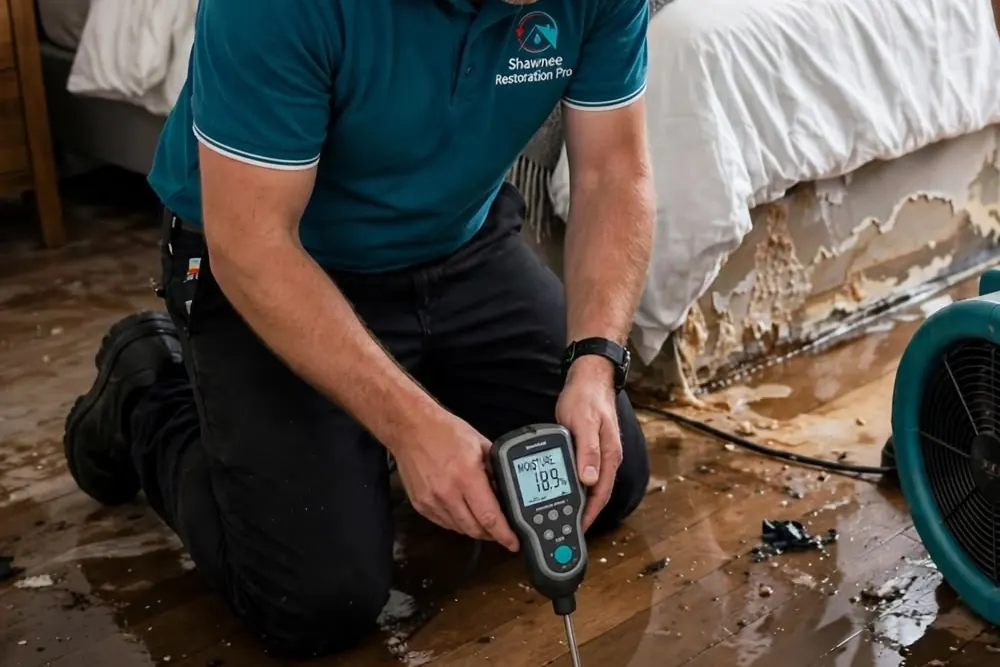
Readings are compared with a starting baseline and with unaffected materials, and a house counts as dry once the wet materials return to normal levels, not when surfaces simply feel dry. Structural drying and dehumidification follows this method.
Can wet carpet, drywall, or hardwood be saved?
Sometimes. The answer turns on the type of water and the time the materials stayed wet. Firm drywall and hardwood may be dried, while soaked padding, soft drywall, and wet insulation are often replaced. Contaminated water changes the answer, and no one can say for certain until the materials are seen.
Can water damage cause mold?
Yes. Mold can begin to grow within 24 to 48 hours on materials that stay wet, which is why EPA guidance says to dry within that window, though mold does not always appear. Visible mold needs its own attention.
Can I dry out water damage myself with fans?
For a small clean-water spill, fans and a dehumidifier can help. But hidden moisture in walls and subfloors is easy to miss, and EPA guidance says not to run fans until the water is known to be clean. Sewage and floodwater are not do-it-yourself jobs.
Working With Our Team
Are you available 24/7, and what is your response time?
Yes, we are available 24/7, with a 60-minute response. The sooner you reach us after finding water, the less of it spreads. Tell us where the water is and what caused it, and we will explain what happens next.
Are you licensed, insured, and IICRC certified, and do you work with insurance companies?
Yes. We are IICRC certified, licensed and insured, and your insurance company is one we work with. Photos and notes taken before cleanup help with your claim, whichever way coverage goes.
What areas of Shawnee do you serve?
We serve Shawnee, Kansas homeowners, including those in ZIP codes 66216 and 66226 within Johnson County. Not sure your address is covered? Ask when you reach us, and we will confirm.